

 |
 |
 |
 |
 |
|
 |
|
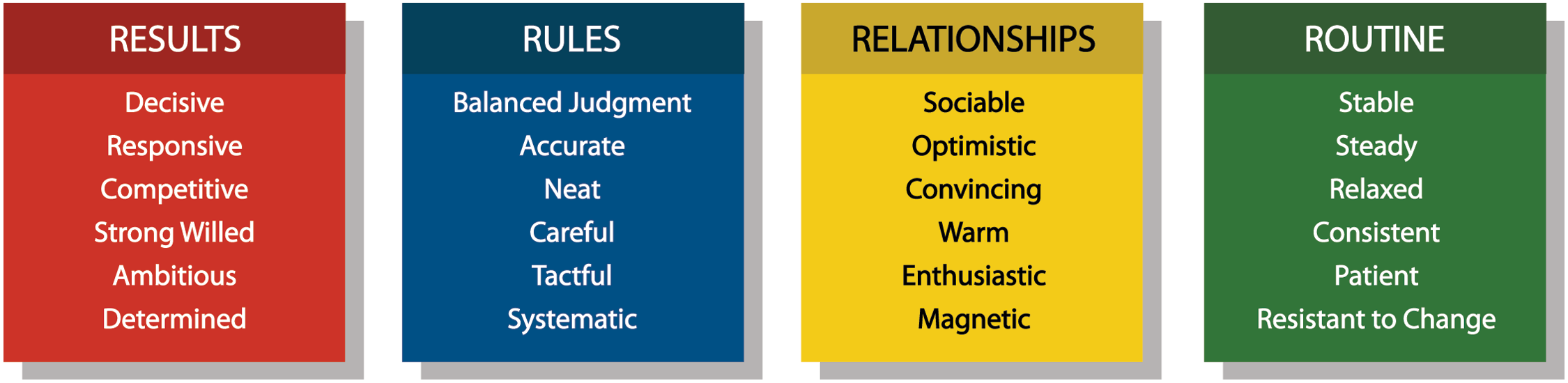
ROUTINE - Steve finds energy with ROUTINE. His routine gives him peace and stability. Steve likes to play the supporting role to others. He tends to remain quiet in conversations and will only speak when spoken to. Steve will avoid conflict whenever possible. He may be seen as passive-aggressive in his actions. Getting into his "inner circle" may take time, but once you are in, you will be seen as a trusted source. Family and those in the "inner circle" are of great value to Steve. In fact, he will frequently put their needs before his own. Steve moves at a very slow pace and will not be pressured. If he feels pressured, you will not be confronted, but he will quietly wait for a safe opportunity to leave the situation. Steve prefers to follow the course others have traveled before him instead of being the pioneer. Change will be very difficult for him.
|
|
RULES: Steve finds energy in following and enforcing the RULES. He will be very competent and compliant in almost every situation. Details and thoroughness are gifts that Steve possesses. Beware, because he will use those gifts to find the flaws in your arguments. Steve feels rules were written for a reason and they should be followed. He will want to know the rules, review the agreements in detail and will have a list of questions to be answered. He will not be taken in by emotion, charm or pressure. He will look for the facts and the facts alone. He is likely to make a "pros" and "cons" list to help make decisions. The more information he has, the more likely he is to make a decision. Steve may come across as somewhat distant or evasive until he trusts you. Be the expert he can depend on. He craves systems and processes, especially when those processes reveal data he considers to be important to help him make a decision. He will not be rushed through the process, and may suspect a sinister motive if he feels pressure from you. Proper protocol is critical to Steve. "Special rates" or "deals" will not appeal to him. Nor will personal banter. Take time to show him the facts. The calculated effort and opportunity will help Steve be comfortable with a particular plan.
|
| | ||
| ROUTINE (100%) | RULES (99%) | |
| Key Focus | Routine - Maintaining the plan is critical. Change is not easy. Spend time connecting and building the relationship before plunging into business discussions. | Identifying Reality - Steve will go to great lengths to gather, analyze, and test information and alternatives. |
| Strategy | Lose/Win - Steve may put others’ needs before his own. It is important for you to help him be loyal to himself. Let him know that he deserves to win too. Be a leader and allow Steve to join your team. | Win through Work - Steve will not be pushed or rushed. He will have questions and maybe even little "tests" for you to verify your knowledge and expertise. Do your homework and know your stuff as there may be big opportunities with this style. |
| Mindset | Peaceful - Keeping peace and stability are critical. Steve is not interested in being a trailblazer. Help him understand what many others in this situation have done. | Always Right - Steve likes to be right and he usually is. He has done his homework. Do not give your standard sales pitch unless it is flawless. This style loves to catch inconsistencies in your assertions and can quickly lose respect for you. |
| Biggest Asset | Support - Steve loves to support people in general. He tends to have great listening skills and can be a strong referral source for additional business. | Perfection - Steve loves things to be right and perfect. He will go to great lengths to complete a task perfectly. This can sometimes be a detriment as it may not be completed in a timely manner. |
| Making a Change | Change is Difficult - Steve may stay in a bad situation for far too long. Help him become loyal to himself. If you detect a poor situation, never attack the advisors, only attack the advice they are giving. | Analysis - This style will analyze and study before agreeing to a change. Sometimes it may not be the numbers as much as what they feel is the right thing to do. |
| Strokes and Compliments | Not a great receiver of compliments - Focus on how they have contributed to the team, the family or their group. Leaving a legacy and being a provider to those close to them will be important to this group. | Acknowledge their time and effort. This style takes great pride in doing the work and achieving the goal through substantial effort. |
| Decision Making | Steve may have difficulty establishing priorities and making decisions. Show him what is "normal" for someone in his situation. | Spreadsheets - Present the facts and the numbers when making your points. Charm and fun will not work well as this style tends to be unemotional when making decisions. Stick to the facts and know your stuff. |
| Delivering "The News" | Steve prefers to have the facts laid out. Bad news, however, can make him fearful and have a paralyzing effect, so be very gentle and find ways to maintain consistency. | Stay Factual - Steve will most likely want a "just" outcome, so stay focused and unemotional. You may not get a second chance if you make a mistake or neglect to deliver on a commitment. |
| Tone | Speak Slowly & Softly - Steve will appreciate you taking time to provide thorough explanations. | Take a soft, slow tone. Stay factual and demonstrate your established policies and procedures for working together. |
| Pace | Very Slow - Do not push your agenda. | Very slow and methodical. |
| What to Avoid | Pressure or push tactics - This will disengage Steve quickly and cause him to not want to do business with you. | Pressure or push tactics - Steve will most likely be turned off and see through a hard-sell tactic or an artificial timeline. |
| Assigning Homework | Give a list of things you need and help Steve understand that you need the information to provide him with the best possible future outcome. | Consider Relevancy - Only ask for relevant information as Steve will not part with personal information easily. Ensure that the process is clear and then follow an established timeline. Once you are a trusted advisor, Steve typically has all the information you could need at his fingertips. |
|
ROUTINE
(100%)
Based on Steve's responses, here are some quick adaptations to make when dealing with him:
|
|
Begin conversations with personal comments about family and be genuinely interested in Steve's responses. Take time to understand what Steve holds most dear in his life. Your ability to impact that may be more important to Steve than the impact you have on him directly. Be very slow and deliberate with your conversation. Pause every now and then to ask Steve if he agrees with the assertions you just made, before you move on. He may otherwise keep his disagreement to himself. Include comforting reassurances when communicating with Steve. Use variations of the phrase "What most people do in your situation is…," to help Steve understand that he is not doing anything pioneer or new. Focus your efforts on helping Steve understand how doing business with you benefits his family and has a lasting effect on the future. |
|
RULES
(99%)
Based on Steve's secondary style, you may want to also consider these adaptations when talking with him:
|
|
Take some time to establish a clear agenda for every meeting and then stick to the ground rules you have laid out. Feel free to assert the training and education which have led to your level of competency. Keep your emotions under wraps and focus on the facts in order to gain trust. Keep your pace slow and be prepared. Let Steve know that you play by the rules and will follow through with any promises you make. Be understanding of Steve's desire to verify the information you present. Steve may need some time to do his homework. Allow him that time, but only with a clear "next step" to reengage. Steve is probably a perfectionist and with good reason. Avoid confrontation when he has taken a stance on an issue, because challenging or criticizing that decision will not usually benefit you. |
|
ROUTINE
(100%)
Based on Steve's responses, here are some ways to elicit action from him:
|
|
Focus your comments on the safety and security aspects of doing business with you. Highlight "guarantees" or other stability aspects of a particular solution. Make it easy to do business with you. Steve will appreciate you taking all the pressure off the decision to move forward. Show solutions which have worked for others in the past and demonstrate why those outcomes are likely to occur again. Allow Steve to "help you" by moving forward today, but allow him an "out-clause" so that the pressure of a final decision is removed. |
|
RULES
(99%)
You may also want to keep these motivations in mind based on Steve's secondary style:
|
|
Present your solutions in a logical, linear, step-by-step manner and provide the documentation to prove your assertions. Allow Steve time to sort through the material. Position yourself as the sought-after expert and stay emotionally detached from the transaction. Be precise and use probabilities when a hard date is not available. Go the extra mile to prove your worth and knowledge to earn Steve's respect. Play by the rules and maintain slow and steady progress through an established agenda. Utilize spreadsheets or computer programs to highlight actual benefits or reasons to move forward, but avoid pressure tactics and artificial timelines. |
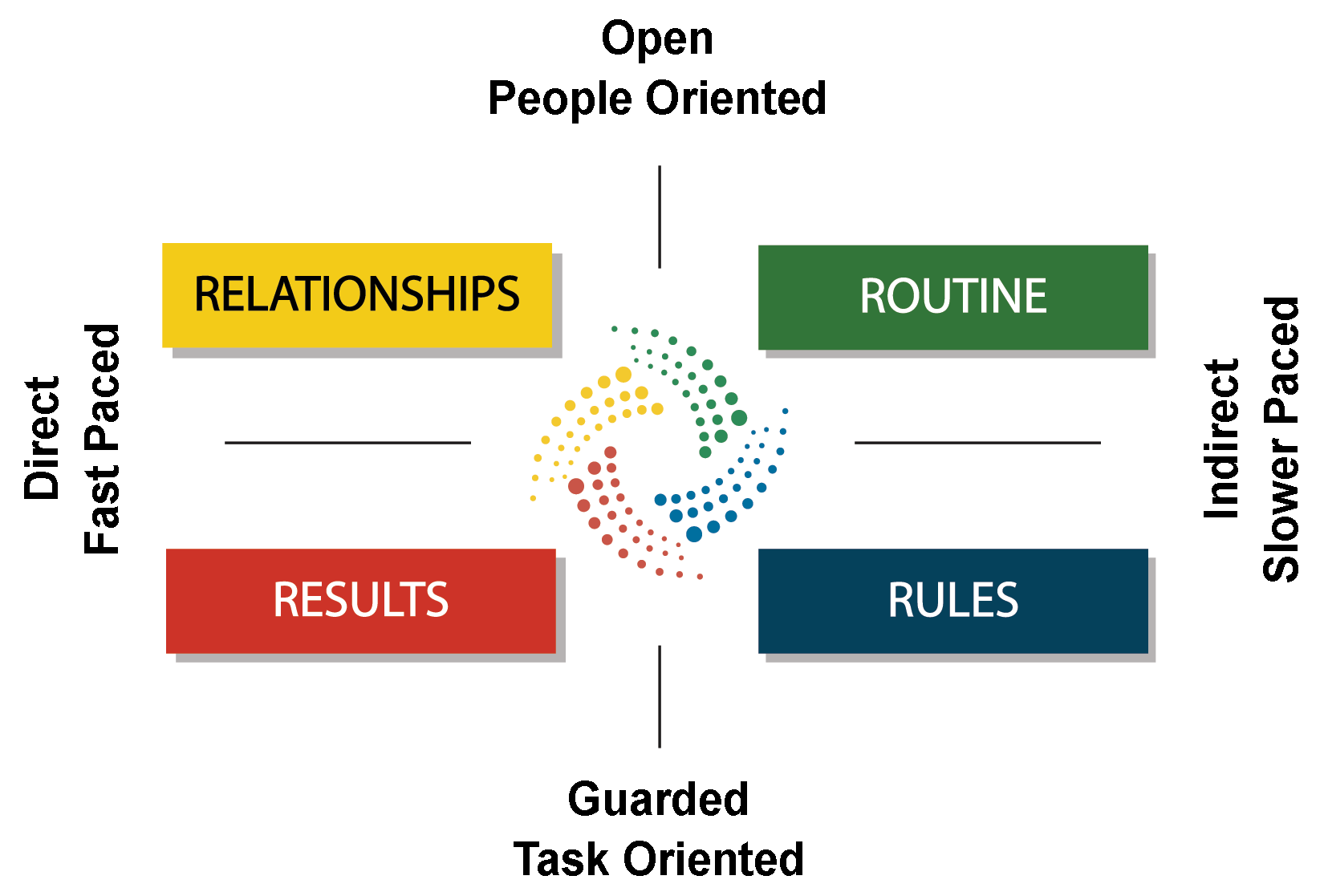
| To Speed Up Your Pace: | To Slow Down Your Pace: | ||
| Speak, move and make decisions more quickly | Talk, walk and make decisions more slowly | ||
| Initiate alternatives and options | Ask Steve his opinion and acknowledge it | ||
| Make Recommendations | Share the decision-making process | ||
| Use Direct Statements rather than generalities | Allow for alternatives and Utilize Generalities | ||
| Be Confident and Assured | Soften Your Tone, Do Not Interrupt | ||
| Challenge and Tactfully Disagree when Appropriate to do so | Refrain from Criticism, Challenge, or Pushiness | ||
| Face Conflict, but Avoid Personal Attacks | Choose Your Words Carefully when Disagreeing |
| To Stay Oriented on People: | To Stay Oriented on the Task: | ||
| Share your Feelings, Show your Emotion | Get Right Down to Business – Bottom Line | ||
| Respond to the Expression of other's Feelings | Stay Logical and Factual | ||
| Compliment Steve Personally | Stick to the Agenda and the Topic of Discussion | ||
| Find Common Interests, Develop the Relationship | Do Not Waste Steve's Time | ||
| Loosen Up, Use Motion and Gestures | Downplay Your Enthusiasm and Body Movement | ||
| Be Willing to Digress from the Agenda | Stick to the Agenda – Stay on Topic | ||
| Do Not Initiate Physical Contact |